Fixed Income Calculator
Redesigning a reference financial tool without losing the precision professionals depend on.
The Fixed Income Calculator is a reference tool used across the Dominican capital market to evaluate fixed-income instruments through prices, yields, traded amounts and projected cash flows. The challenge was to modernize an established product while preserving the accuracy and trust expected from a professional financial tool.
- Organization
- Bolsa de Valores de la República Dominicana
- Year
- 2024
The redesigned experience
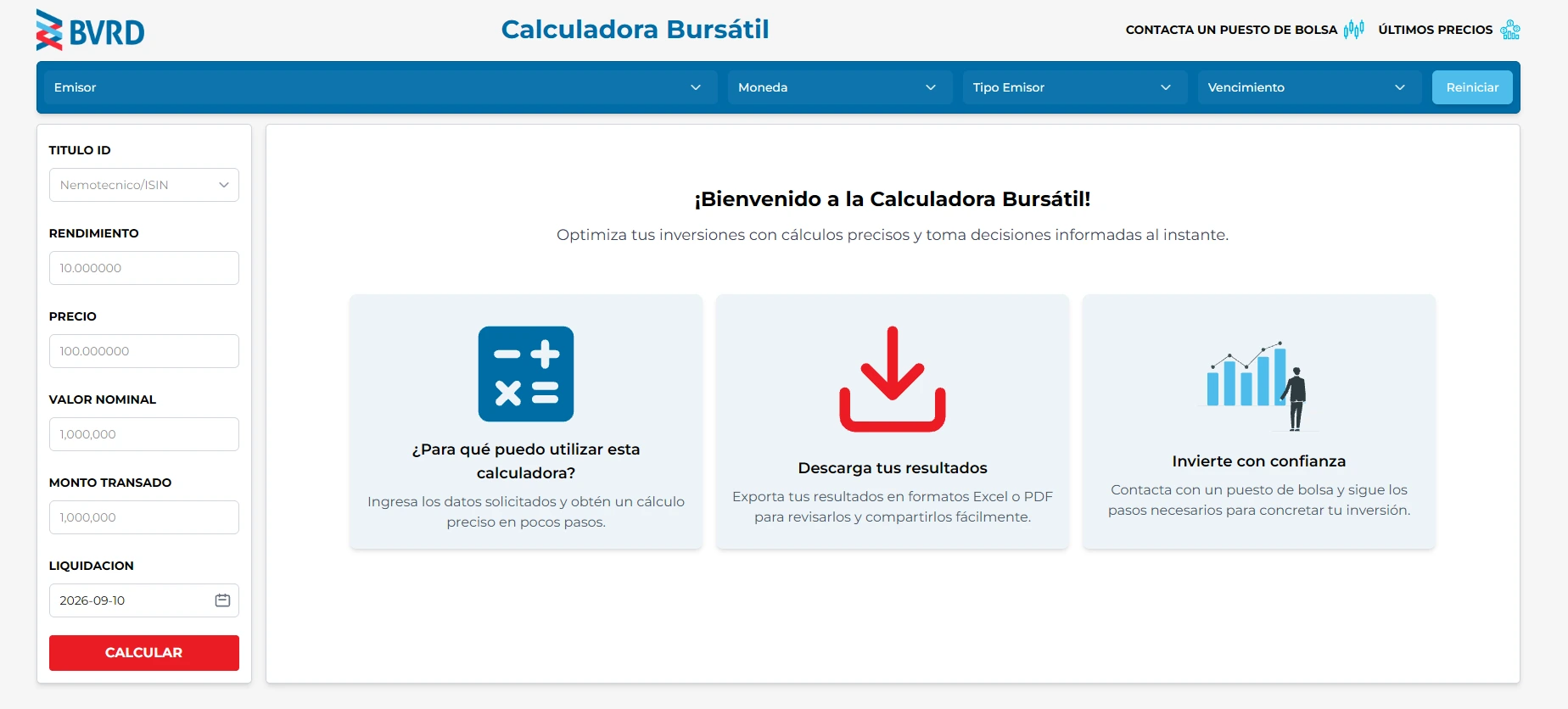
A single workspace connects instrument selection, transaction inputs, calculation results and cash flows.
- Instrument
- Inputs
- Calculation
- Results
- Cash flows
01 Context
More than a calculator
The Fixed Income Calculator had become a reference tool for professionals across the Dominican capital market. Traders, securities brokers, treasury teams and other market participants used it to evaluate instruments and communicate prices, yields and cash flows.
That importance created an unusual redesign challenge: the product needed to evolve without disrupting a calculation experience users already trusted.
02 The legacy experience
A trusted tool showing its age
The existing calculator already solved an important financial problem, but the experience reflected years of incremental evolution.
Navigation and interaction issues had accumulated, parts of the experience no longer behaved as expected, and the interface made it harder to understand the relationship between the values entered and the financial information returned by the calculation.
The redesign was therefore not about replacing the financial logic. It was about preserving what users trusted while removing friction around it.
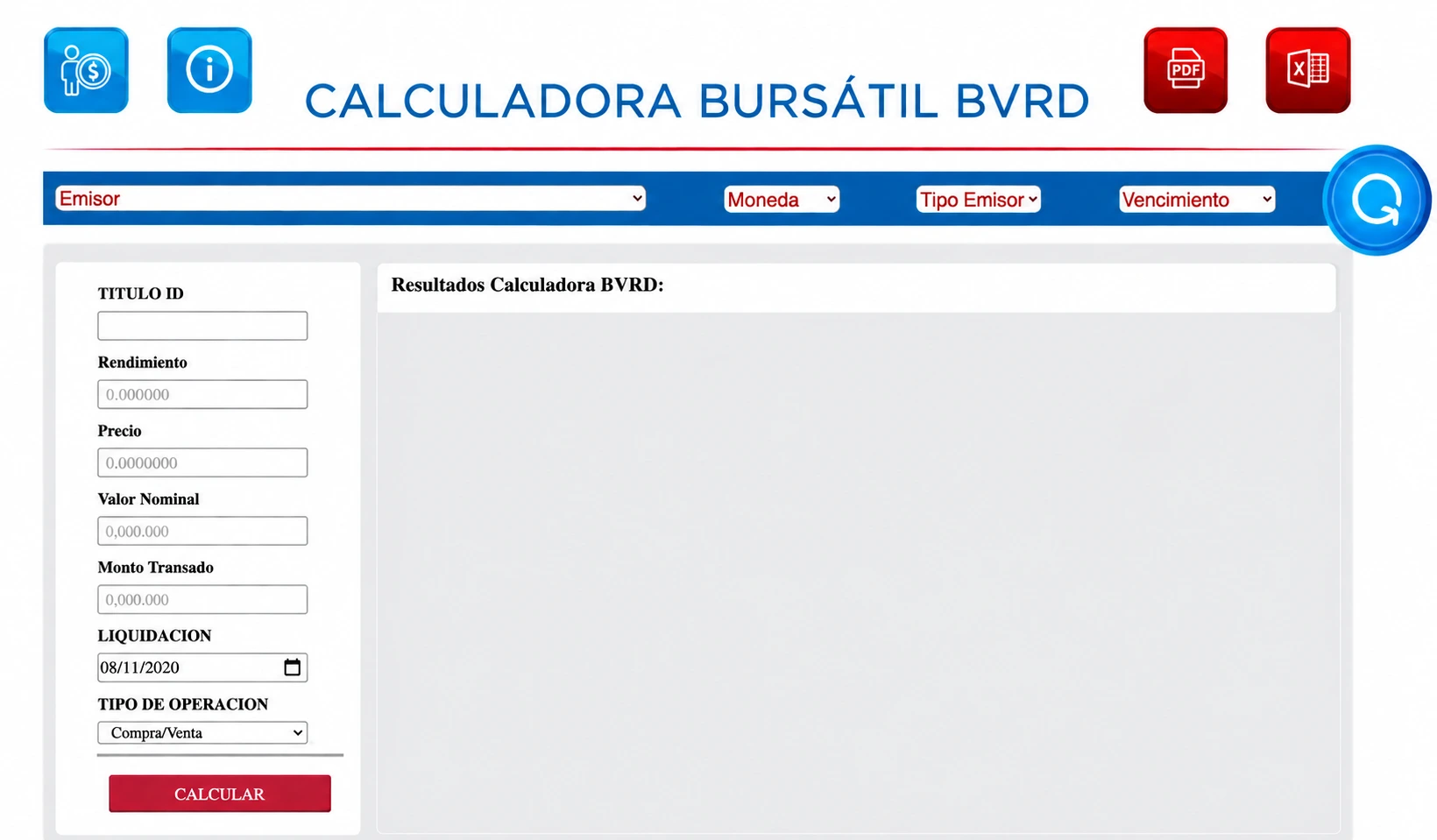
What the legacy experience showed
-
Navigation
The structure had accumulated friction.
-
Interaction reliability
The financial logic needed to be preserved.
-
Information hierarchy
There was room to clarify priorities.
-
Result readability
Information could be presented more clearly.
03 Existing users
Starting with the people already using it
Because the calculator already had an established user base, the redesign did not begin from assumptions about how a financial calculator should work.
I spoke with users of the existing product to understand what they depended on, where the experience created friction and which changes would improve the tool without disrupting familiar workflows.
Those conversations helped separate problems in the interface from behaviors that were already valuable to users.
How the redesign started
- Listen
- Identify friction
- Preserve what works
- Redesign
04 Redesign decisions
Redesigning without breaking what already worked
The calculator already had established financial logic and a user base that depended on it. The redesign was not intended to simplify the calculation or reduce the information available, but to reorganize the experience around a clearer relationship between instrument selection, transaction inputs and results.
The new structure kept transaction parameters, prices, yields, traded values and instrument cash flows within the same workflow, improving readability without removing the depth professional users required.
What the redesign held to
-
Preserve
Trusted financial logic
-
Clarify
Inputs and results
-
Modernize
Navigation and interaction
-
Extend
Requested capabilities
The challenge was to make the process more accessible without altering the financial logic that gave the tool its value.
05 Validation
Validating changes with the people who depended on the tool
The redesigned experience was reviewed with key users before and during implementation.
That validation helped confirm whether the new hierarchy and interactions improved the experience while preserving the workflows and financial information users expected from the calculator.
Feedback informed further adjustments before the redesigned experience was released.
- Design
- Validate
- Refine
- Release
06 My contribution
Working across research, design and implementation
My involvement covered the redesign from understanding the existing experience through implementation.
I worked with users to identify friction, translated those findings and business requirements into the new experience, designed the interface, validated the changes with key users and developed the front end that was integrated with the calculator's existing backend.
That continuity between research, design and implementation allowed design decisions to remain grounded in both user needs and technical feasibility.
-
Research
Existing users and workflows
-
Design
Information architecture and interaction
-
Implement
Front-end development and integration
07 A product question
The redesign left a broader question open
The Fixed Income Calculator needed to preserve the depth required by professionals working with these instruments. But that same depth raised a different question: should someone simply trying to understand an investment face the same experience?
The exploration opened the possibility of thinking about the product through two levels of complexity — one for professional use and another more accessible to retail users — without turning that direction into a conclusion of the project.
Two levels of complexity, as a question
Professional
Specialized experience
Retail
Guided experience